Archeology
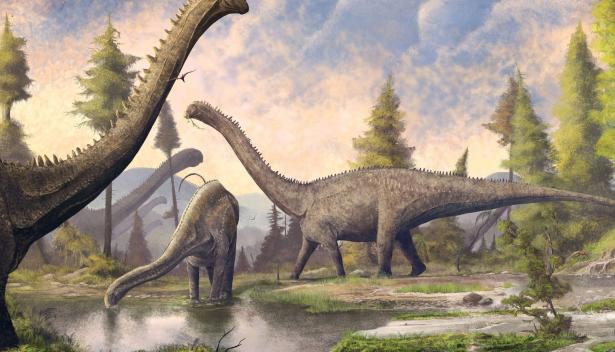
Forget the drab, gray dinosaurs that have haunted our collective imagination for decades; some of them could actually be as colorful as certain birds.
A team of scientists, led by Tess Gallagher of the University of Bristol (UK), made this discovery by analyzing sauropod skin fossils. Collected a few years ago in a quarry in Montana, USA, these fossils dated back approximately 145 million years.
Sauropods were quadrupedal, herbivorous dinosaurs and the largest animals that ever walked the earth. This well-known order of dinosaurs includes the Brontosaurus and, as seen here, the Diplodocus.
The study focused on small fragments of four fossil scales, analyzing the cells under a microscope.
The skin revealed various melanosomes, intracellular structures that store melanin (responsible for the coloration of skin, hair, eyes, and feathers). The sheer number of these melanosomes suggests "a potential diversity of colors," Gallagher points out.
Discoid structures (a type of melanosome) are now found in the feathers of modern birds. According to Gallagher, this shows that Diplodocus was likely very colorful, with a wide variety of vibrant hues. Further studies are expected to shed more light on the skin tones of these dinosaurs.
Scientists are increasingly unraveling mysteries surrounding dinosaurs, revealing new information about their appearance, behavior, and diversity.
For example, they recently discovered a way to distinguish males from females: females often had broken tail tips, likely caused by violent mating.
Source : slate.fr
Comments
0
comment
Be the first to post a comment!
ADD YOUR COMMENT



0
comment