Archeology
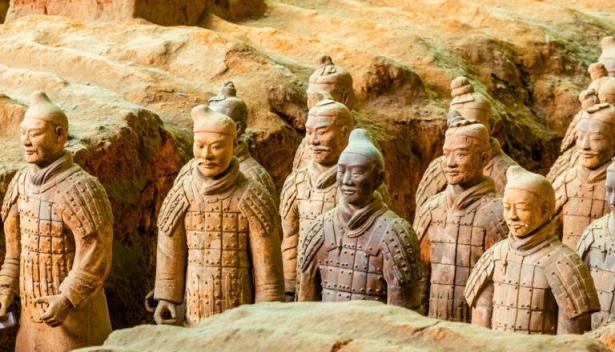
It is perhaps the most famous tomb in the world: I'm referring to that of Emperor Qin Shi Huang and his 8,000 terracotta warriors, discovered in 1974. The mausoleum, located near Xi'an in Shaanxi province, continues to fascinate researchers and the general public.
Qin Shi Huang was crowned king of the Qin state in 247 BC and set about conquering the six other kingdoms to establish the first empire of China. This emperor left behind ambitious achievements:
- the construction of a precursor to the Great Wall
- the digging of the 32-kilometer-long Lingqu Canal
- the colossal construction of his own mausoleum
This last structure is believed to have mobilized some 700,000 workers for 38 years, from 246 to 208 BC.
What is surprising is that the burial chamber itself has remained undisturbed since the beginning of excavations.
The historian Sima Qian mentions formidable defensive structures. Indeed, abnormally high levels of mercury have been found around the site, corroborating Sima Qian's hypothesis in his work "Shiji."
Archaeologists are cautious; the example of the terracotta warriors, whose vibrant colors have faded upon contact with the air, serves as a warning against hasty excavation.
Researchers believe the mausoleum could contain "100 tons or more" of mercury, a highly toxic metal.
Qin Shi Huang's quest for immortality may have hastened his demise at the age of 49. Desiring a longer life, the emperor consumed mercury-based elixirs, a dangerous practice.
In any case, even though he did not live long, his tomb is eternal.
Source : msn.com
Comments
0
comment
Be the first to post a comment!
ADD YOUR COMMENT



0
comment