Archeology
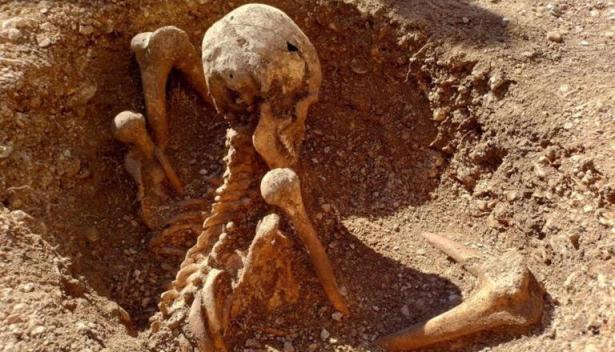
The discovery was made near the Joséphine-Baker primary school in eastern Dijon. Archaeologists unearthed a remarkably well-preserved skeleton, positioned seated in a pit one meter in diameter, with its hands resting on its knees, its back against the eastern wall of the grave, and its gaze turned westward.
This find brings the number of skeletons discovered in the same position at the same site to four since the beginning of the month.
Thirteen other skeletons were found in the same posture 20 meters away last year. The dating places the discovery in the Gallic period, between 300 and 200 BC.
Including the 1992 excavations, nearly twenty Gaulish graves buried in this very specific manner have been identified in this area of Dijon. Worldwide, 75 such burial sites are known. They are found in France, Switzerland, and the United Kingdom.
Archaeological excavations carried out over the past thirty years have shown that Dijon held an important place among the Gauls.
A Celtic people who appeared around the 5th century BC, the Gauls occupied territories stretching from France to Belgium and Switzerland, and even further east.
Apart from Julius Caesar's account, little is known about the Gauls.
For Régis Labeaune, a researcher at the National Institute for Preventive Archaeological Research (INRAP), these discoveries are significant; he says:
Despite the number of discoveries, the reason for the seated burials remains a mystery. Researchers still don't know the meaning of this posture in the tomb, whether it was a form of punishment or a specific ritual.
To find an answer, it will be necessary to understand why five of the bodies show signs of violence, including one with a fatal head injury. Furthermore, the graves are empty of grave goods; only a bracelet was found, allowing for Gallic dating.
The identified individuals are all men between 1.62 and 1.82 meters tall, with the exception of one child. Their teeth are very well preserved, probably due to a low-sugar diet. Their bones, however, show signs of osteoarthritis, particularly in the legs, indicating intense activity.
Source : msn.com
Comments
0
comment
Be the first to post a comment!
ADD YOUR COMMENT



0
comment