Astronomy
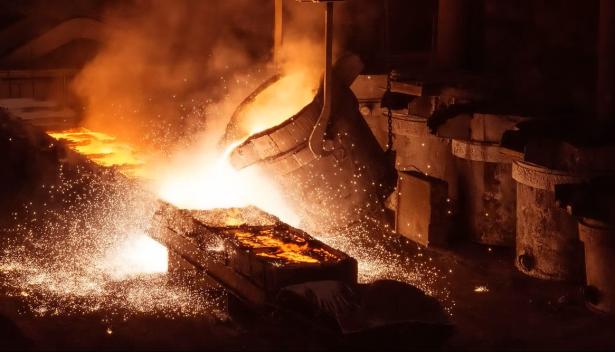
This is the unexpected reaction that scientists have just observed.
While it has been known for centuries that heating a metal softens it so that it can then be shaped as desired, researchers at Northwestern University have observed the opposite effect.
Their study has just demonstrated that under conditions of extremely rapid deformation, heat does not soften pure metals, but on the contrary, makes them stronger.
Chris Schuh, a professor at Northwestern and lead author of the study, reminds us.
He continues:
To test this hypothesis, researchers used a microballistic device that fired microparticles at several hundred meters per second onto metallic surfaces. The impacts caused deformations of up to 100 million percent per second, on the order of microseconds.
Under this scenario, pure metals like nickel and gold exhibited abnormal hardening; conversely, alloys followed the commonly accepted rule: the higher the temperature, the more malleable the material.
The explanation is as follows: heat would intensify the vibration of the metal's atoms, and these oscillations, becoming so intense, would physically prevent the movement necessary for deformation.
Chris Schuh explains.
In other words, instead of softening the metal, it would strengthen it.
The phenomenon disappears as soon as 0.3% of another element is added; the impurities disrupt the crystalline structure and prevent the hardening effect. The purity of the metal is key.
The results of the experiment could prove useful in the fields of astronomy and satellites.
Source : msn.com
Comments
0
comment
Be the first to post a comment!
ADD YOUR COMMENT



0
comment