Astronomy

Japanese researchers have found the building blocks of DNA on this asteroid

Japanese researchers have found the building blocks of DNA on this asteroid

By Freeman on 03-26-2026

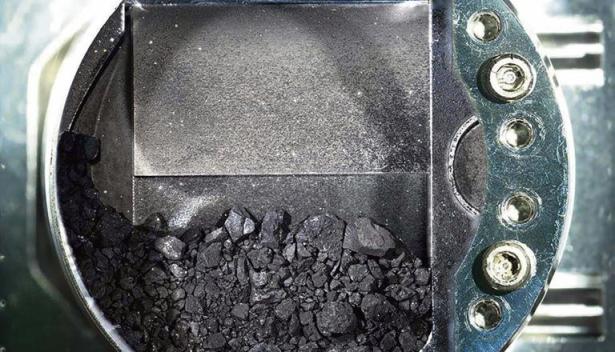
A team of nine Japanese scientists has found all the building blocks of life in samples recovered from the asteroid Ryugu; namely, the five bases that make up DNA and, when assembled, constitute the genetic code of all living things on Earth.

More precisely, the researchers detected the five nitrogenous bases of life—adenine (A), guanine (G), cytosine (C), thymine (T), and uracil (U)—in the 5.4 grams of Ryugu dust hermetically sealed by the Japanese probe Hayabusa-2, launched in 2014 and returned to Earth in late 2020.

As a reminder, Ryugu is a small asteroid, 875 meters in diameter, located 300 million kilometers from Earth. Japanese researchers from the Agency for Marine-Earth Science and Technology, led by biogeochemist Toshiki Koga, published their study in the British journal "Nature Astronomy."

He explains:

This significant result shows that these essential components of genetic material can form and be preserved in the primitive materials of asteroids. Furthermore, these five nucleic bases were detected not only on Ryugu, but also in samples from the asteroid Bennu. This suggests that nucleic bases could be widespread in primitive bodies throughout the Solar System, thus providing direct evidence for the existence of such molecules in intact extraterrestrial materials.

However, researchers don't know how these molecules formed on the asteroids.

This isn't the first time DNA components have been found on asteroids. These molecules have already been detected in samples from the asteroid Bennu, as well as in fragments of meteorites that fell to Earth: one in France, south of Montauban in 1864 (named Orgueil), and the other in Australia in 1969 (named Murchison).

Scientists wanted to determine the proportions of nitrogenous bases relative to each other, and it turns out that the purine bases (adenine and guanine) and pyrimidine bases (cytosine, thymine, and uracil) are roughly equal in the Ryugu samples. The Murchison samples were richer in purine bases, while the Bennu and Orgueil samples were richer in pyrimidine bases.

Toshiki Koga suggests:

The presence of complex organic molecules in Ryugu is likely the result of chemical processes that occurred in its parent body, the primitive asteroid from which it was ejected after a collision. Some of these compounds could also originate from early interstellar chemistry. These findings demonstrate that important building blocks of life can form through abiotic processes in space.

The discovery revives the "panspermia" hypothesis, according to which the early Earth received the formula for life during the "Late Heavy Bombardment": the shower of meteorites and comets that occurred 4 billion years ago.

Toshiki Koga insists:

Our results support the hypothesis that asteroids like Ryugu could have delivered organic molecules, including nucleic bases, to early Earth. Some of the elements necessary for life may have already been present before life itself emerged. However, Toshiki Koga emphasizes, this does not mean that life originated in space.

Researchers will now focus on understanding the processes that shaped organic matter in the early solar system.

Toshiki Koga explains:

We are particularly studying the relationship between nucleic acid composition and ammonia, which could provide clues to previously unknown formation pathways. We will also continue to compare Ryugu samples with other meteorites and asteroids, and conduct laboratory experiments to test these hypotheses.

Source : msn.com

0

comment

Comments

0

comment


Be the first to post a comment!

ADD YOUR COMMENT

*

Message:

  • lol
  • 8-)
  • ;-)
  • <3
  • T_T
  • >(<
  • dxb
  • :|^
  • 0m0
  • >|
  • <D<
  • 8-D
  • ><
  • 0|
  • ;.;
  • :-p
  • :-)
  • :-(
  • °0°
  • c_c
  • -_-
  • <(<
  • -D-
  • *w*
  • ^^
  • D..
  • -=-
  • :-P
  • ()^
  • zZz
  • :-x
  • :-?
  • *-*
  • |Dx
  • o_-
  • °°x

Preview
Post
Resume music
Click to continue playback

0

Music Info

  • Title:
  • Artist
  • Genre
  • Album
  • Duration
  • Year
  • Size
  • Format

Music
