Astronomy
Will we one day be able to colonize Mars? This question has been on researchers' minds for decades.
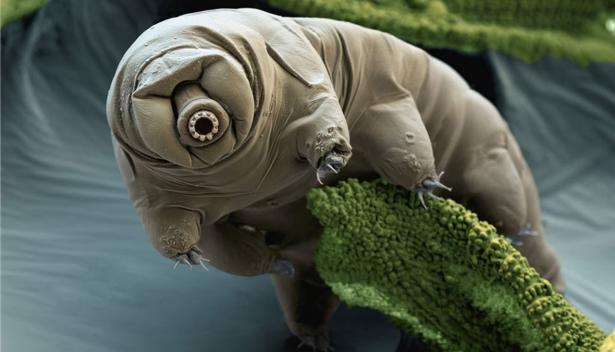
The latest test: researchers placed tardigrades, those incredibly resilient microscopic creatures, in simulated Martian soil, and guess what? They didn't like it at all. The tardigrades slowed their movements before becoming completely immobile.
The experiment wasn't entirely negative, however, as after adding a little water to the artificial soil, the tardigrades started moving again, including those that had been there for several days. One or more as-yet-unidentified substances appear to make the terrain hostile to life, but their effects are lost after exposure to water.
Astronauts are careful to ensure that probes don't contaminate their environment with terrestrial organisms.
“That’s why we’re talking about the study,” explains Corien Bakermans, a professor of microbiology at Pennsylvania State University.
The choice of tardigrades for the experiment was not accidental; they are capable of surviving freezing temperatures or long periods without food. They enter a dormant state when dehydrated or exposed to harsh conditions.
Once rehydrated, they resume their normal activities.
Following the experiment, the researchers believe that the substance or substances problematic for life and present in the soil could be dissolved in water or even removed with salt.
Problème : l'eau est une ressource rare lors des missions spatiales ; difficile d'imaginer dans ces conditions un rinçage à grande échelle. Les scientifiques américains étudieront prochainement les autres paramètres susceptibles d'inhiber l'activité biologique comme la température ou la pression atmosphérique afin de mieux comprendre Mars.
Experiments help us understand the conditions necessary for a possible human settlement on the red planet.
Source : msn.com
Comments
0
comment
Be the first to post a comment!
ADD YOUR COMMENT



0
comment