



première news wouhou !
Astronomy
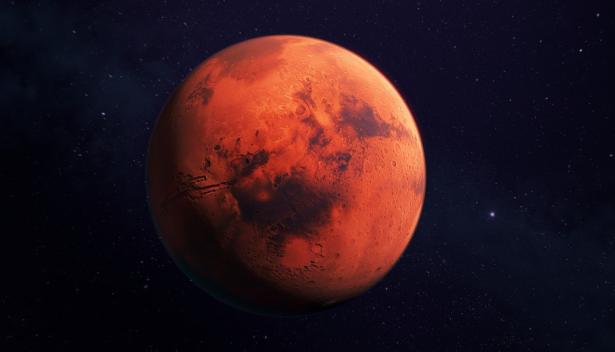
A team of researchers believes NASA found a sign of life on Mars half a century ago, in 1976 to be precise, with the Viking 1 probe. NASA may have misinterpreted the results of its experiment and killed the life form in a second test.
When the Viking probe landed on Mars in the summer of 1976, it first sent back the first images of our neighboring planet and then began biological tests of the Martian soil in the hope of finding life, past or present. The results were mixed, and Viking seemed to find traces of chlorinated organic compounds, but without certainty.
explains Professor Dirk Schulze-Makuch, an astronomer at the University of Berlin, in an article on Big Think.
At the time, it was thought that these organic compounds had traveled from Earth with the rover. And then NASA found no other signs of organic matter on Mars.
declared Gerald Soffen, director of the Viking program. Most researchers agreed, but some now believe the results were misinterpreted and that a form of life had indeed been detected.
To detect life, the experiment involved spreading nutrients and radioactive carbon onto Martian soil. The idea was that if microorganisms were living there, they would consume the nutrients and then release carbon as a gas. And guess what: this gas would be detected by the experiment. However,
according to the new study. Viking had discovered a form of microbial life on Mars.
Scientists at the time did indeed identify this data, but subsequent experiments presented contrasting results. The second and third injections of nutrients did not produce more gas. Yet, if microbes were present in the analyzed soil, they should produce more gas after receiving more nutrients.
In 1976, it was thought that perchlorate, present in rocket fuel, had metabolized the nutrients.
But today, Dirk Schulze-Makuch and his colleagues counter that perchlorate has since been found on Mars by the Phoenix probe. And this time, NASA has confirmed that it did indeed originate from Mars.
It's therefore possible that the Viking probe did indeed discover life on Mars and accidentally killed it during the study.
This can be compared to what happens to certain microbes on Earth in extreme conditions, such as those living in the Atacama Desert: too much water would kill them. This explains why the second injection likely killed the life form; once dead, it could no longer produce any gases.
Source : msn.com
Comments
1
comment
Freeman a dit :
02-26-2026 at 16:53


première news wouhou !
ADD YOUR COMMENT
1
comment